How to Read Man-Marking and Zonal Pressing in Football
Learn to read man-marking and zonal pressing by tracking runners, pressure and cover, so you can tell how a defense shares responsibility during play.
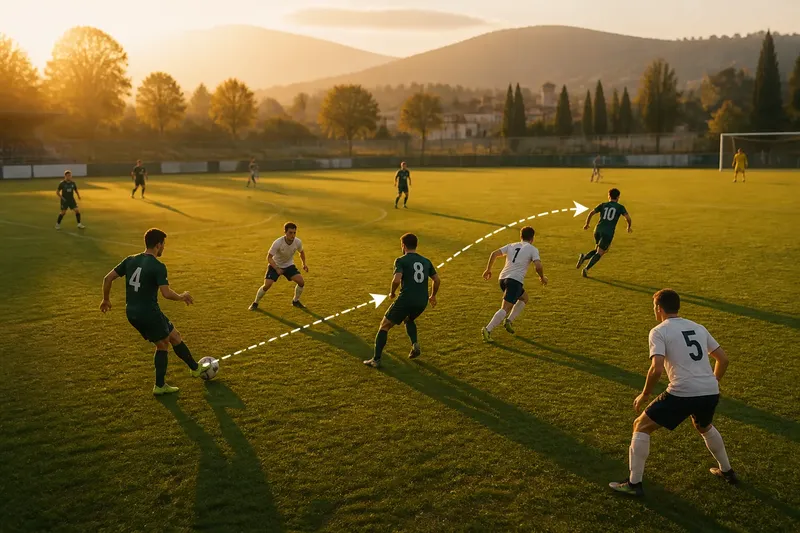
Man-marking and zonal pressing are easiest to distinguish by watching what defenders do when an opponent moves. Track a runner away from the ball: does a defender follow, or does a teammate take over while the first player protects space? That first response reveals more than a formation label.
Marking and space
In man-oriented defending, a player’s main reference is an opponent. If that opponent moves, the defender may follow, even beyond the area where the defender started. This can make a receiver uncomfortable, but a runner can also draw a marker away and open a lane for someone else.
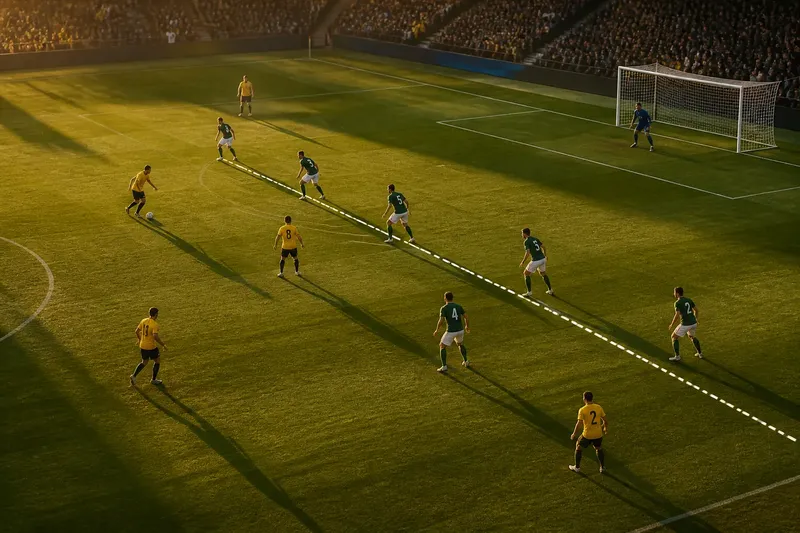
Zonal defending starts with areas and passing lanes. Players shift as the ball moves, and an opponent entering a zone may be engaged without being followed across the pitch. The aim is to preserve useful distances between teammates while deciding who should close the receiver.
These are not exclusive systems. A defender may hold a zone until a runner threatens it, then track closely as a teammate covers the space left behind. The useful distinction is the first responsibility a player appears to follow, not the label attached to the formation.
Pressing and cover
Pressing describes how a team applies pressure to the ball and limits the next pass; it is not another word for zonal defending. A team can defend zones without pressing high, or press while using player-oriented assignments.
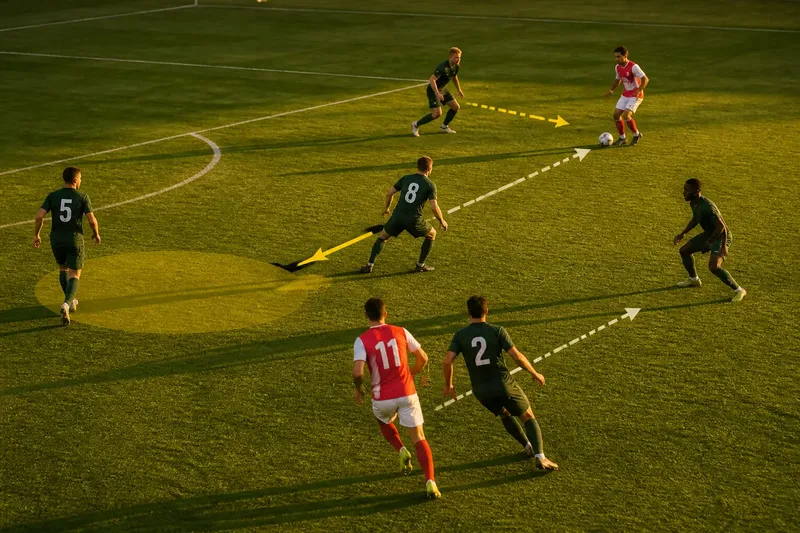
In a coordinated press, the nearest player closes the ball while teammates adjust to restrict likely exits. A forward might angle a run to screen a central pass, as a midfielder steps toward the receiver and a defender holds cover behind. The aim is not simply to sprint at the ball. It is to make the attack’s next choices harder.
A forward pass is not automatically a good pressing trigger. If the receiver has nearby support and clear options, rushing forward can expose a route around the first defender. Watch whether teammates move with the pressure and whether the approach angle blocks a useful pass.
Runner handoffs
One defender following an attacker does not, by itself, prove the team is using man-marking. A zonal defender may leave a position to address an immediate threat, especially if a runner enters a dangerous area. The next movement provides better evidence.
Imagine a winger drifting inside as an opposing fullback follows. If a midfielder takes over the winger, the fullback can return toward the flank and the back line may stay connected. Look for the observable result: both the runner and the space near the touchline remain covered.
If the original defender keeps following and no teammate takes responsibility, the line may stretch. That can reflect a man-oriented assignment, a late adjustment, or uncertainty about who owns the runner. Read the sequence rather than inferring a system from one chase.
Gaps and free players
A press can look lively yet leave a simple passing lane open. If one player charges at the ball while teammates remain flat, the passer may play around the pressure. Follow the passer’s options: can they find a central receiver, or is that route screened?
Zonal coverage can also leave an opponent free between lines when players hesitate at the edge of their areas. A receiver is especially dangerous if the defense neither closes the ball nor protects the route beyond it. Check whether a nearby midfielder steps out and whether another player slides across to cover the lane.
What is not worth the effort is treating every forward pass as a signal for the whole team to rush. The quality of the trigger and the cover behind the pressure matter more than the direction of the ball alone.
Reading defensive shape?
How can you tell man-marking from zonal defending?
Follow a runner who moves away from the ball. Continued pursuit across neighboring areas suggests a man-oriented responsibility; a handoff, with the first defender returning to protect space, suggests zonal coverage or a mixed approach.
Is zonal defending the same as pressing?
No. Zonal defending describes how players relate to areas and opponents, while pressing describes how they pressure the ball and restrict the next pass. A team can combine either approach with the other.
Why does a pressing team leave space behind?
Players moving toward the ball can open space elsewhere if the rest of the unit does not shift with them. Check whether teammates cover the likely pass and the area behind the player who steps out.
Can a defense combine man-marking and zonal principles?
Yes. A defender may hold a zone until an opponent becomes a direct threat, then follow closely as a teammate covers the vacated space. The balance can change with the ball’s position and the runner’s movement.
Follow responsibility
To read a defensive shape, follow the chain of responsibility: who approaches the ball, who tracks a runner, who protects the space left behind, and who blocks the next pass. That sequence shows whether a team is organizing around opponents, areas, or a blend.
Man-marking and zonal pressing describe different emphases, not a simple historical sequence from one system to another. On the pitch, watch for the handoff: one defender releases a runner, another takes responsibility, and the team keeps cover around the ball.