The High Line Is Not a Shortcut to Control
A high defensive line can tighten midfield pressure but exposes space behind. Learn how to read the press, goalkeeper position and runs to judge control.
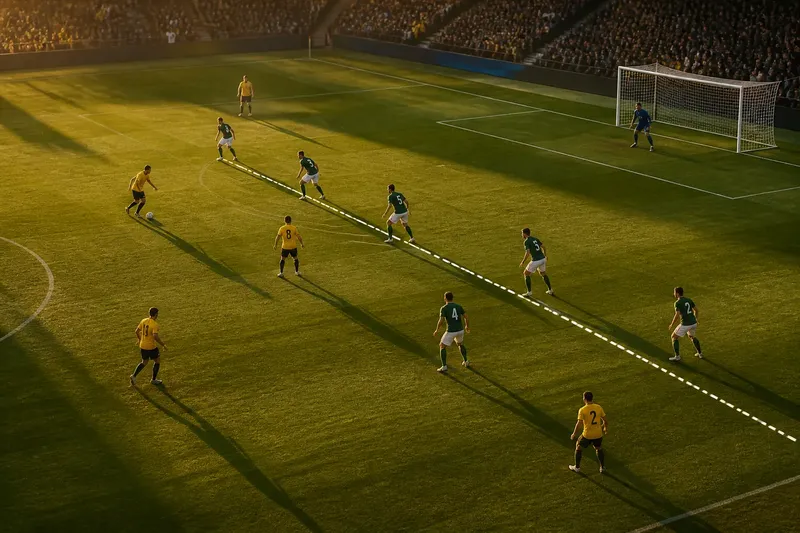
A high defensive line can make a team look compact, but it does not automatically control a match. It works when pressure on the ball, the defenders’ movement and the goalkeeper’s position help manage the space left behind. Without that support, a team can squeeze opponents into a small area and still be one pass away from a dangerous break.
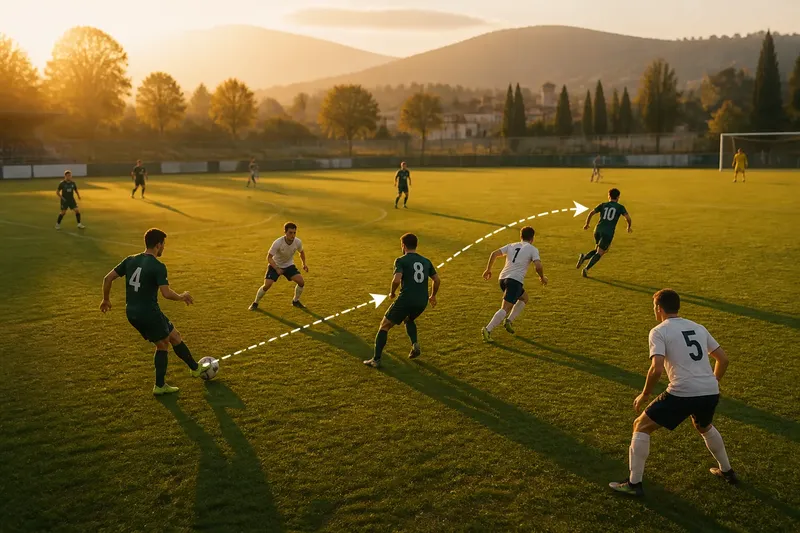
To read a high line, watch what happens between the opponent’s first touch and the next pass. Does the ball carrier have time to look up? Are defenders stepping together, or retreating at different speeds? Those details reveal whether the line is part of an organized plan or simply a risky position.
Compactness and exposure
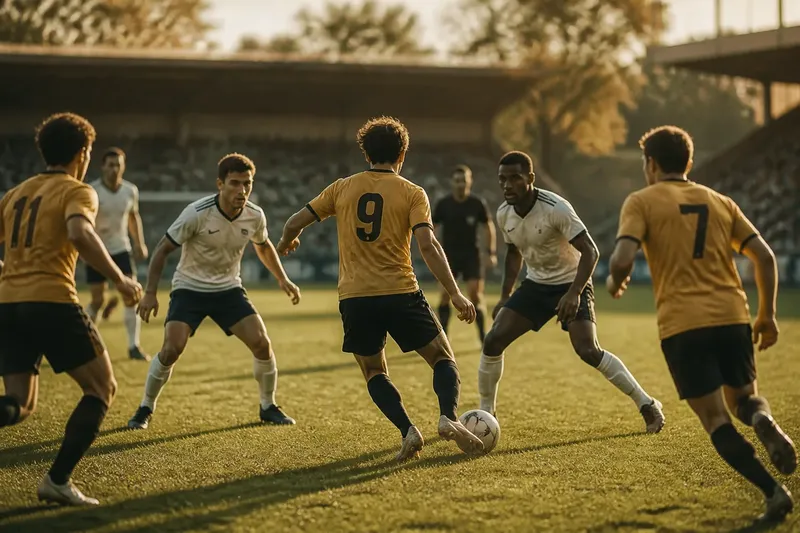
When defenders move closer to midfield, the distance between the back line and the players pressing ahead can shrink. Shorter distances help teammates support one another and make central passing lanes harder to use. The team may also recover the ball nearer the opponent’s goal, with fewer opponents between the turnover and a scoring chance.
The cost is space behind the defenders. A forward level with the last defender can threaten that space as soon as a pass is available. A chipped ball, a quick through pass or a direct clearance can turn a compact shape into a footrace. The higher the line, the more important it becomes to deny the passer time and protect against the run behind.
That is why line height and pressing cannot be judged separately. If the first defender closes down while teammates block likely outlets, the opponent may be forced to play hurriedly. If the press arrives late or leaves an easy route forward, the back line can be exposed before it has time to retreat.
Three line choices
High line
A high line can suit a team that wants to contest possession in the opponent’s half and has defenders comfortable stepping forward together. It can also help a team shorten the distance to support an attack after losing the ball. The arrangement demands alertness: defenders must recognize when to hold their ground, step up or turn and run.
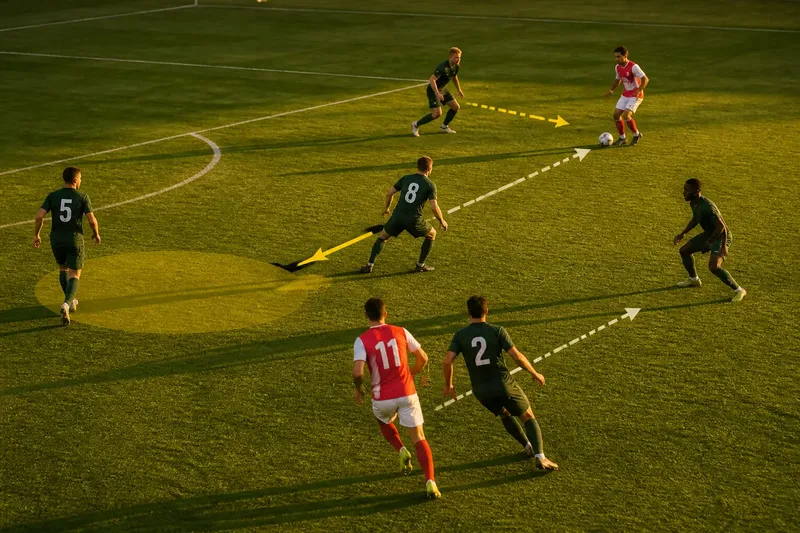
Look for a connected press. One forward might close down the center-back while a teammate angles a run to limit the pass into midfield. The defenders behind them then have a clearer cue to squeeze forward. If the ball carrier can pass freely, the same high position becomes an invitation to play into the open space beyond it.
Medium block
A medium block holds the defensive line farther from the opponent’s goal than a high line, while still aiming to keep the team compact. It can suit a side that wants to protect the area in front of its defense, limit direct access through the middle and choose pressing moments rather than chase every pass.
This is not a passive line by definition. Players can step forward when a receiver takes a poor touch or receives with limited options. The team begins from a position with less space behind to defend. It may concede more room for the opponent to circulate the ball, but make forward progress harder to achieve cleanly.
Deeper line
A deeper line can suit a team facing fast runners, a skilled passer who has time to pick a pass, or a match situation in which protecting the space behind matters more than contesting the ball near the opponent’s goal. It gives defenders more room to see the threat develop and can discourage runs beyond them.
The trade-off is room in front of the defense. Opponents may receive between midfield and the back line, then turn or combine from there. A deeper position still needs midfield support and clear decisions about when to step out. Dropping back without pressure or coordination can leave the team stretched in a different direction.
Warning signs
Do not judge the line by its location alone. Watch how it reacts when possession changes, when a center-back carries the ball forward and when an opponent receives facing goal. These moments show whether teammates share the same cues.
- Passer’s time: If the passer can look up and choose a target, the defense may be holding too high without enough pressure. Then close the nearest outlet or drop into a more secure block; do not leave the line exposed while waiting for a press that is not arriving.
- Defenders’ movement: If one defender steps while another drops, an opponent can exploit the gap. Then hold a coordinated line or retreat together; avoid isolated steps that open a lane.
- Runs beyond the line: If opponents repeatedly make unmarked runs, the line is not controlling the threat. Then track the runners more closely or start deeper; do not keep squeezing forward without pressure on the passer.
- Goalkeeper’s position: If the keeper is ready to cover space outside the penalty area, a higher line has support. If the keeper stays deep, choose a line that defenders can protect without relying on that cover.
- Backward-pass response: If a backward pass triggers the team to move forward together, it can be a useful pressing cue. If only the forwards advance, keep the midfield and defense connected instead of letting a gap open.
- Receiver’s body shape: If an opponent receives facing forward with room to turn, close that player or retreat to protect the space behind. If the receiver is facing away and tightly marked, the defenders can consider stepping up together.
Say a team starts with its defenders near the halfway line, but its forwards cannot close down the opposing center-backs. The center-back has time to lift a pass behind the defense, and the defenders turn toward their own goal. The coach then asks the team to use a medium block, keep the midfield close to the back line and press only when a receiver takes a poor touch. The expected observable change is clear: the center-backs may still pass sideways, but forward balls into space should meet a more compact shape. The trade-off is less pressure near the opponent’s goal.
Which line fits the moment?
What makes a high line effective?
It needs pressure on the ball and defenders who can move in concert. The goalkeeper’s willingness and ability to cover behind the defense also matter. If those pieces are missing, a high starting position can leave the back line defending more space than the team can manage.
Does a high line always mean a high press?
No. A team can hold its defenders high without closing down the ball aggressively, but that gives the passer time to attempt a forward ball. A high line is most coherent when the players ahead of it can limit the opponent’s options and provide clear signals to step up.
When is a medium block the better choice?
It can make sense when a team wants to protect space behind its defenders but still press selected passes. The choice suits situations where opponents can exploit a high line with quick forward balls, while the defending team can stay organized without chasing the ball everywhere.
Can a deeper line control a match?
It can control the space that matters to a team’s plan, even if it gives the opponent more possession in safer areas. The defense still needs midfielders to restrict passes into dangerous pockets and a shared cue for stepping out; otherwise, the opponent can settle near the penalty area.
Choosing the line
Pick a line by asking what the opponent can do with time, not by treating height as a measure of ambition. If the opponent struggles to play through pressure and the goalkeeper can cover behind the defense, a high line may help keep play in the opponent’s half. If the opponent can release runners with accurate early passes, a medium or deeper line may better protect the space those passes target.
Also consider the defenders’ movement. A team whose center-backs are comfortable stepping forward may benefit from a higher position, while a back line that turns slowly may prefer more room to track runs. These are not fixed labels for a team’s identity. A side can press high after a backward pass, hold a medium block in settled play and drop deeper when an opponent has time to attack the space behind.
For a quick viewing test, follow one opponent’s pass from the back. Note whether the ball carrier is pressed, whether the defensive line moves in response and whether the goalkeeper is positioned to cover a run beyond it. If those actions fit together, the high line may help the team control territory. If they do not, moving the defenders forward is only moving the danger closer to their goal.
The high line is not a shortcut to control; it is a choice about which space to defend and which space to leave. Ask whether the team can pressure the ball and protect the space its line creates. That is the useful distinction: a higher starting position matters less than how quickly the team reacts when an opponent has time to play forward.