Watching the First Five Minutes After a Turnover
Watch five elapsed minutes after a turnover to spot how teams press, retreat, protect space, and find an outlet—without confusing stoppages with playing time.
Watching five minutes of elapsed match time after a turnover gives you a clear window into how a team reacts to losing or winning the ball. Start the clock at the change of possession, keep it running through stoppages, and stop when five real minutes have passed. That means the window can contain less than five minutes of live play.
This is a viewing exercise, not a verdict on a coach or player. Follow one turnover, note the next few actions, and see how the first response changes when it succeeds or fails. A handful of sequences can reveal a pattern; none tells the whole story.
Choose One Turnover
Start when possession clearly changes. An interception, a clean tackle, or a player controlling a loose ball can give you a readable beginning. If the ball is still bouncing between players, wait for the first controlled touch.
Keep your attention on the carrier and the closest opponents, then widen your view. The carrier’s first touch matters, but so do teammates moving into view, players closing space, and defenders protecting the route toward goal. If the camera follows only the ball, use the positions you can see rather than guessing about players outside the frame.
For the exercise, start a five-minute elapsed-time window at the turnover. Let the clock run continuously, including during stoppages, replays, and breaks in live play. Stop when five minutes on the broadcast or match clock have passed; if the broadcast clock pauses during a stoppage, use a wall clock or timer instead. This gives you a fixed viewing window, though the amount of live action inside it will vary.
Read The First Response
Three broad responses are useful to watch for. They can overlap, and a team may change its choice as the situation develops.
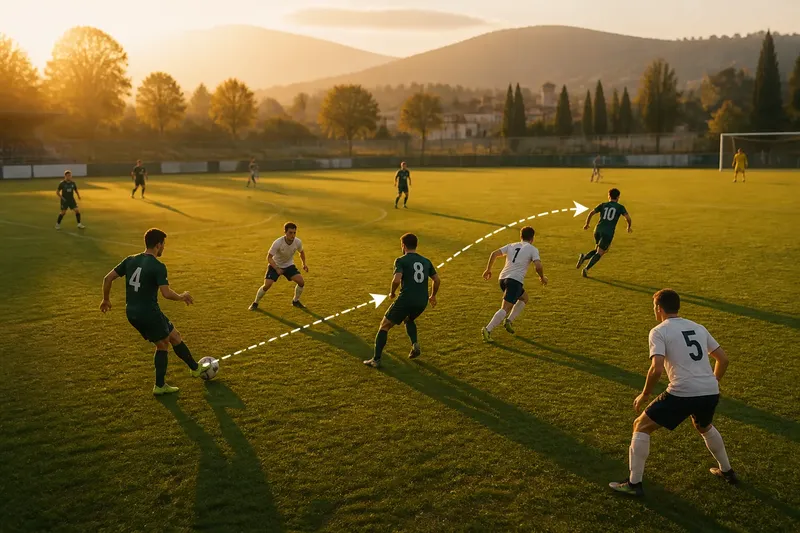
- Counterpress: Players near the ball close down the new carrier or nearby passing options soon after losing possession. Watch whether they arrive together and whether the carrier is forced to turn, hurry a pass, or move away from the direct route forward.
- Retreat: The team drops toward its own goal or settles into a more compact shape. Note who runs back first, which central spaces they protect, and whether the carrier can advance while the defense organizes.
- Find an outlet: A team that wins the ball looks for a teammate who can receive and help it move away from pressure. The outlet might be wide, central, or a forward making a run. Track whether the first pass reaches that player and what options they have next.
A quick chase is not automatically a counterpress. One player may sprint at the ball while teammates retreat, leaving a gap behind the challenge. Likewise, a forward pass is not necessarily a prepared outlet: the receiver needs space or support to keep the move alive. Record what players do, not what a label suggests they intended.
Follow Space, Not Speed
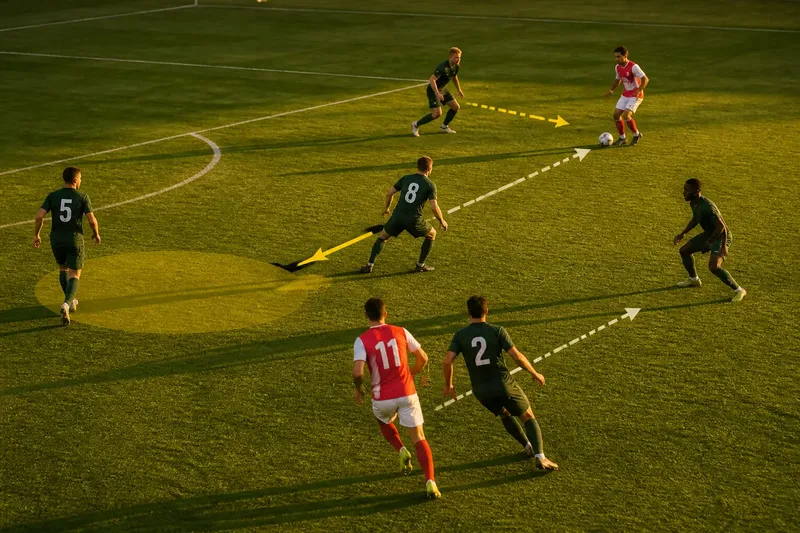
Fast movement catches the eye, but the shape around it often explains more. When a team loses the ball, look behind the nearest pressers. Are teammates ready to cover a pass through the middle? Are opponents available beyond them? A press can look intense while still leaving the carrier a clear escape route.
When the team retreats, check whether players fall back as a connected group or scatter toward separate threats. A defender may step toward the carrier while a midfielder covers the space the defender has left. That handoff can slow an attack without requiring everyone to chase the ball.
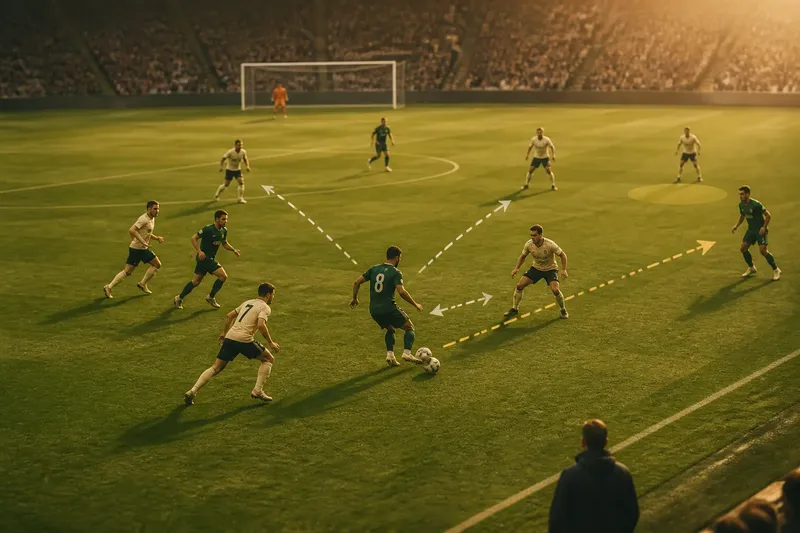
After a regain, scan for the first usable lane. An outlet may be a nearby teammate who can hold off pressure, a wide player with room to receive, or a forward who gives the carrier a direct target. If the pass is unavailable, a short backward or sideways pass can still help the team keep the ball and bring support closer. Ask not just, “Did they go forward?” but, “What did that first choice make possible?”
Notice The Next Turn
The first response can set up a second change in direction. A team that counterpresses may win the ball back high and attack before its opponent regains shape. If the pressure is bypassed, those same players may have to turn and run toward their own goal. Watch for the moment when the first plan meets resistance.
A retreat can also create a route out. Once the defending team wins possession, players who had been dropping back may spread out to offer passing options. Conversely, an attempted outlet can be intercepted, leaving the team that just regained the ball exposed again. These follow-on moments help distinguish a deliberate response from a move that simply ends in another loose ball.
For a compact note, use four prompts: who reacted first, what space opened, where the first pass went, and what happened next? Add an observation rather than a rating. “Two players closed the carrier; a central lane remained open; the next pass escaped” describes more than “good press.”
When Does The Pattern Change?
What counts as a turnover?
Use the first moment a team gains clear control after its opponent had the ball. An interception, a clean tackle, or control of a loose ball can qualify. If neither side has control yet, wait until a player’s touch makes the change readable.
Should I follow the ball or the players?
Begin with the carrier, then look at the nearest teammates and opponents. Tracking only the ball can hide a retreating line or passing option; ignoring it can make you lose the sequence. Scan between the ball and the surrounding shape.
How do I tell a counterpress from a single chase?
Look for coordinated pressure: nearby players closing space or blocking a likely pass while others cover behind them. One isolated sprint may delay play, but it does not by itself show that the team has pressed as a unit.
What if the broadcast cuts away?
Use only what remains visible and mark the sequence as incomplete. Do not infer the position of players outside the camera frame or claim a passing lane was open if you could not see it. The next turnover offers another chance to observe the same choices.
Keep The Notes Useful
Say you see a midfielder intercept a pass near the center circle. Two teammates close the new carrier while a third drops toward the space behind them; the carrier turns away and passes toward the sideline. Your note might read: “Three nearby players pressed; cover stayed central; the forced pass went wide.” Then check whether the defending team wins the ball or the opponent uses the sideline to escape. That follow-up gives the observation context without turning one moment into a sweeping claim.
It is not worth assigning a tactical label to every sprint or tracking every player through a full match. A few clean sequences are easier to compare than a crowded page of guesses. If the camera angle hides the shape, leave that part blank rather than filling it with an assumption.
When the five elapsed minutes are up, compare the turnovers you saw within that window. Did the same players tend to close down? Did the team that lost the ball usually retreat, or did its response depend on where possession changed? Did the first outlet help the new carrier keep possession, or was it cut off? Watching the first five minutes after a turnover is most useful when it leaves you with a precise question to carry into the next passage of play.